
How does developmental history shape adult muscle biology?
To address this question, we study how muscle stem and progenitor cell pools are established during development, how intrinsic programs and extrinsic niche cues regulate their number, identity, and spatial organization, and how these early decisions influence adult muscle function, regeneration, aging, and disease. Our work combines Drosophila as an in vivo developmental model with human skeletal muscle tumor systems.
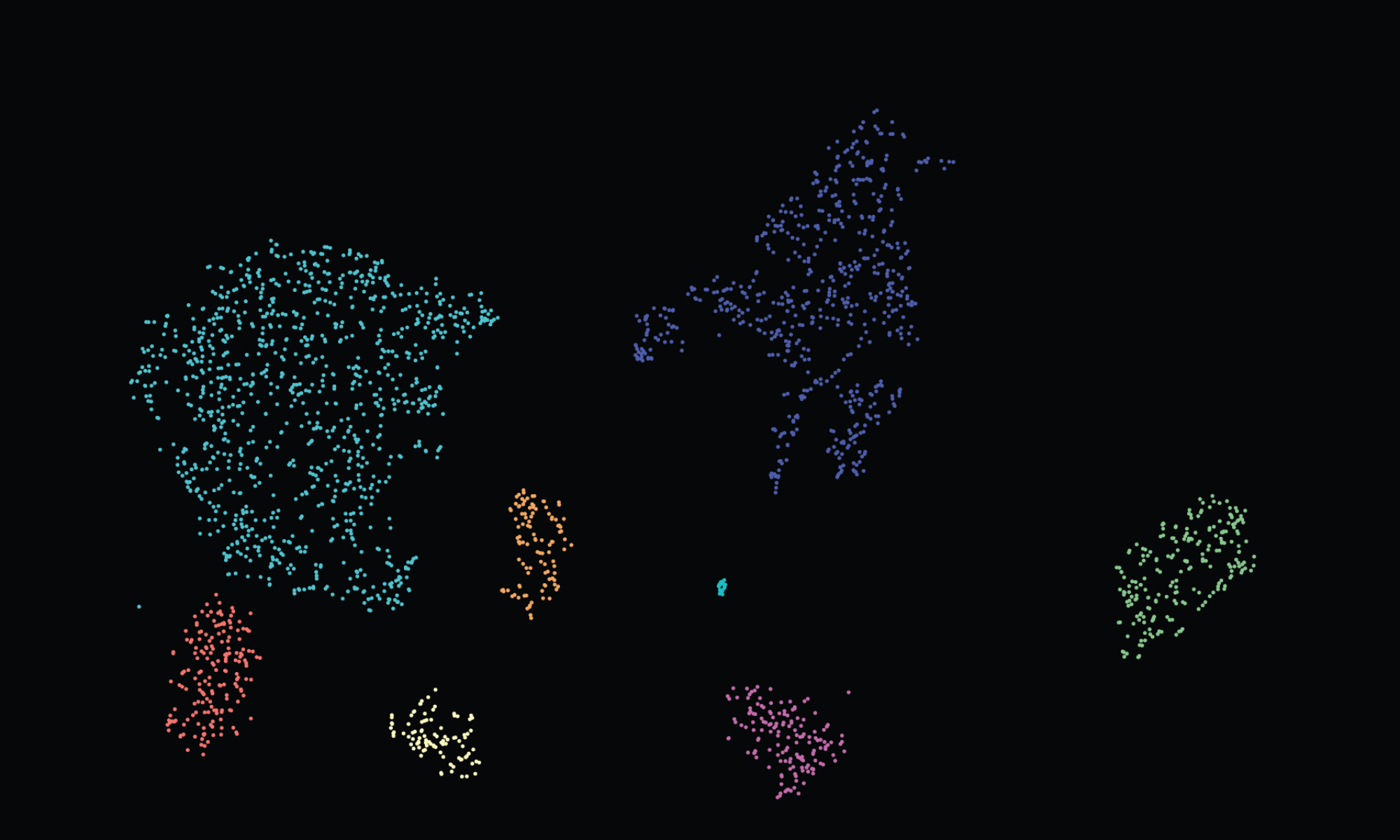
Central to our approach is the ability to resolve spatial patterns in developing muscle stem cell niches using spatial omics, high-content imaging, and AI-assisted microscopy image analysis. By integrating pattern analysis with co-regulated gene programs, we identify candidate regulators of muscle stem/progenitor cell heterogeneity. We then use cell type-specific gene perturbations, including CRISPR-based approaches, to test how developmental heterogeneity and spatial organization shape adult muscle outcomes.


Gallery


